In many universities today, a student exists in five or six different places at once. Their application is in the admissions system. Their grades are in the academic registry. Their housing details are in a facilities spreadsheet. This fragmentation does not just slow down administration, it creates a massive knowledge gap that affects the entire institution, and highlights the urgent need for centralized data.
When systems do not talk to each other, the result is “data silos.” For staff, this means hours spent manually moving data between programs. For students, it means explaining their situation over and over again to different departments. Creating a single source of truth, or in simple terms centralizing data is the only way to ensure everyone on campus is looking at the same real-time information.
What Happens Without Centralized Data?
Students receive conflicting or outdated communication.
Staff manually reconcile data across systems.
Departments operate in isolation.
Errors increase due to duplicate or inconsistent data.
Strategic decisions rely on incomplete reporting.
Centralized data turns scattered records into one continuous student narrative.

The Operational Cost of Fragmentation
Fragmented data is more than a minor annoyance. It is a major drain on campus efficiency. When data is scattered, IT and administrative departments spend more time reconciling inconsistent records than actually supporting students.
For example:
A student may receive a late payment warning despite a scholarship being recorded elsewhere.
Advisors may lack visibility into financial or enrollment status.
Leadership may review reports that do not reflect real-time conditions.
Centralized data connects financial, academic, and administrative information so every department sees the same accurate picture.
Protecting Institutional Knowledge and Security
One of the hidden risks of fragmented data is the loss of institutional knowledge. When an employee leaves, their personal spreadsheets and manual tracking methods often go with them. A centralized CRM ensures that all information remains within the university infrastructure.
Data integrity improves through data centralization. This also reduces the risk of sensitive information being sent to the wrong person.
Furthermore, having all data in one place makes it much easier to comply with strict privacy regulations. Instead of auditing ten different systems, the university has one secure repository to manage and protect.
Empowering Data-Driven Decision Making
The shift to a modern digital university allows leadership to move from guesswork to evidence-based strategy. With a single source of truth, administrators can identify long-term trends that were previously hidden.
Think of it this way:
When your data lives in silos, every report tells only part of the story.
When your data is centralized, the full narrative becomes visible.
For example, by looking at combined enrollment and financial data, a department can see exactly which programs are growing and where resources should be allocated. This transparency builds a culture of accountability. When everyone looks at the same figures regarding student performance and budget, decisions become fairer and more strategic.
Breaking Down the Walls Between Teams
In many institutions, departments work hard, just not always together. Admissions, student services, finance, and housing often operate in parallel systems, connected more by email than by infrastructure.
Data centralization finally breaks down the walls between different teams.. When the admissions team and the support team share the same platform, the handover process becomes invisible to the student.
Teams can set up automated workflows that trigger based on unified data. When a student officially enrolls, the system can automatically notify housing, create their IT account, and send a welcome pack. This removes the manual busy work from the staff’s day. It allows them to focus on their primary mission of supporting and educating students.
Eduhub’s Higher Education Ecosystem
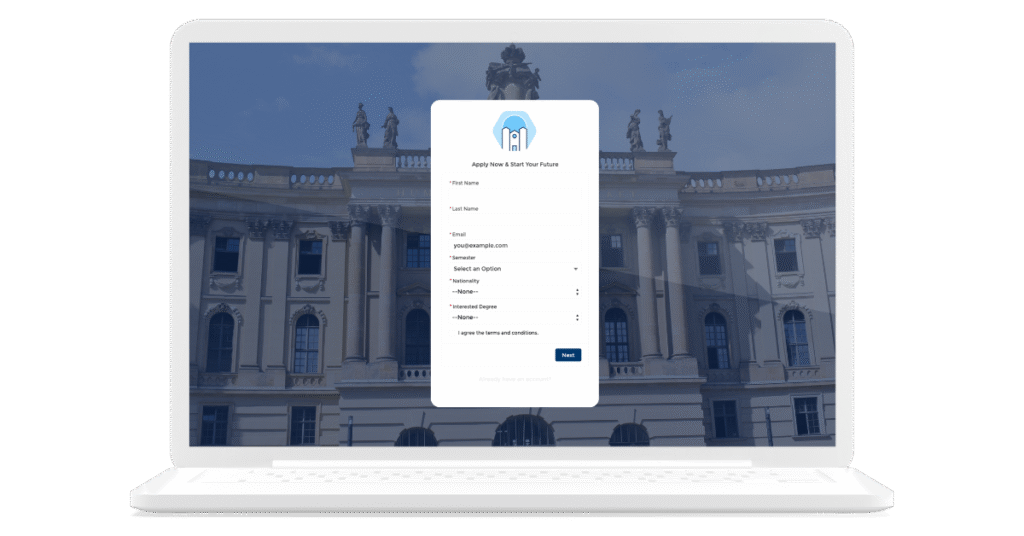
Eduhub’s higher education ecosystem is built around this idea of connected collaboration. It brings together key institutional areas through dedicated modules such as Corporate Communication, Admissions, Finance, and Housing — all designed to operate within one structured environment.
This means:
- Marketing and corporate communication align with admissions in real time.
- Admissions decisions connect directly to financial processes.
- Enrollment automatically informs housing operations.
- Every department contributes to one continuous student lifecycle.
Rather than treating these areas as separate systems, the ecosystem approach ensures that each module supports the others. The result is a coordinated campus where processes are aligned, stakeholders are connected, and students experience continuity from their first interaction to graduation and beyond.
Building a single source of truth sounds like a massive technical challenge, but it does not have to be. Eduhub provides a unified system built directly on Salesforce. It is designed to act as the central nervous system of the university.
By removing data silos and manual entry, Eduhub helps universities operate with a level of efficiency and personalization that was previously impossible. It is not just about managing data, it is about building a modern campus where every student feels seen and every staff member feels empowered.
To learn how to unify your data and transform your student experience, visit Eduhub and see the power of a centralized data in action.
Frequently Asked Questions
What does centralized data mean for a university?
Centralized data means that all student information is connected within one structured environment. Instead of departments working from separate systems, everyone accesses the same real-time information, improving coordination and accuracy across campus.
How does fragmented data affect university staff and students?
When data is scattered across different spreadsheets, staff must spend hours on manual entry and fixing errors. Students often feel frustrated because they have to provide the same information to multiple offices.
How does centralizing data improve institutional security?
Storing data in one secure repository makes it easier to follow privacy laws. It also prevents institutional knowledge from being lost when an employee leaves the university with their own private files.
Can a unified data system help with university budgeting and planning?
Yes. Having all enrollment and financial data in one location allows administrators to see clear trends. This transparency helps leadership make better decisions about where to allocate resources.
How does Eduhub help manage the student journey?
Eduhub keeps all the data through a single portal built on Salesforce. It tracks every student interaction from their first inquiry until they become alumni.